What Is Cap Rate and Why It’s Essential for Real Estate Investors
Understanding the real estate cap rate 2026 is essential for any investor looking to maximize returns. The cap rate, or capitalization rate, is a key financial metric used to evaluate the potential profitability of an investment property, expressed as a percentage. Essentially, it shows how much return a property can generate relative to its total value, helping investors compare opportunities, anticipate cash flow, and assess risk.
Technical definition:
Cap Rate (%) = Net Operating Income (NOI) / Property Value × 100
- Net Operating Income (NOI): Gross rental income minus operating expenses (maintenance, administrative costs, local taxes).
- Property Value: Purchase price or estimated market value.
Cap rate is valuable because it reflects anticipated income relative to the price paid. However, it shouldn’t be the only measure you use — factors like future appreciation, location, tenant profile, and market conditions also impact investment performance.
According to BBVA Research (2026), in Mexico, cap rates for residential properties in cities with strong urban growth such as Guadalajara and León typically range between 5% and 7% annually, while in industrial or corporate rental corridors they can exceed 8%.
Types of Cap Rate and Their Practical Application
There are several cap rate variations, each useful depending on investor goals:
Market Cap Rate
This is based on recent sales of comparable properties. It helps evaluate whether a purchase price aligns with typical returns in the area.
Initial or Gross Cap Rate
Calculated using gross income without deducting operating expenses. Useful for a quick snapshot but doesn’t show true net cash flow.
Net Cap Rate
Includes all operating costs, insurance, and maintenance. This gives a more realistic picture of actual investor return.
Risk‑Adjusted Cap Rate
Factors in vacancy, tenant quality, and market stability, enabling prioritization of lower-risk investments over higher-risk ones.
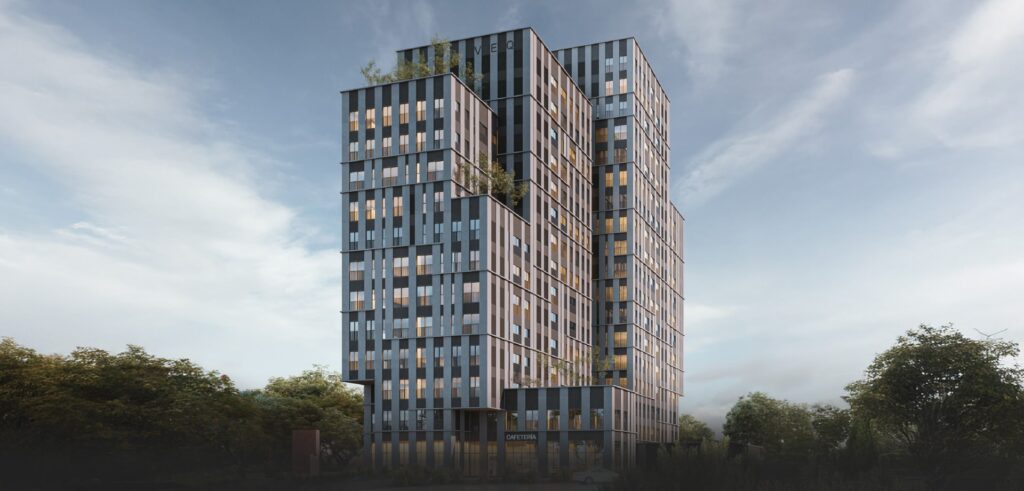
Example: A condo at VEQ Villa Morelos with a $20,000 MXN monthly rent and $3,000 MXN in operating expenses, valued at $4,000,000 MXN, would have an annual NOI of $204,000 MXN and an approximate net cap rate of 5.1%.
How to Correctly Calculate Cap Rate
To accurately calculate cap rate, investors should:
1. Estimate Annual Gross Rent
Include current rental contracts and realistic vacancy projections.
Example: A building at Alana Wellness Living with 40 units averaging $25,000 MXN/month in rent.
2. Subtract Operating Expenses
These include maintenance, administration, insurance, and local taxes.
Operating costs often include HOA fees or shared service expenses.
3. Divide NOI by Property Value
This gives the net cap rate, reflecting real‑world return.
4. Compare with the Market
Analyze similar properties in the same city or corridor to benchmark performance.
CBRE Mexico (2026) recommends comparing cap rates among properties of similar size, location, and segment to ensure informed decision‑making.
Common Mistakes When Using Cap Rate
- Comparing cap rates across different markets: A high cap rate in an emerging area could mean higher risk, not necessarily higher return.
- Ignoring vacancy and hidden costs: Cap rates based on gross rent overestimate profitability.
- Ignoring appreciation potential: A property with a moderate cap rate could outperform one with a higher cap rate if it appreciates more rapidly.
Applying Cap Rate to Grupo VEQ Developments
Grupo VEQ’s portfolio includes strategic developments that allow investors to assess both profitability and long‑term value:
- VEQ Villa Morelos (Zapopan): Condos aimed at executives, with historically stable occupancy and high‑value amenities — ideal for rent‑focused investors.
- VEQ Brasilia (Guadalajara): Condos with strong revaluation potential and student rental demand, balancing appreciation and cash flow.
- Meridiano 101 (León): Condos near industrial and commercial hubs, generating higher cap rates due to corporate rental demand.
- Black Eleven (Tijuana): Condos near industrial and service corridors, suited for short‑ and mid‑term rentals with solid returns.
- Alana Wellness Living (Nuevo Vallarta): Luxury tourism‑oriented condos where returns are driven by vacation rental income and long‑term investment value.
Each development caters to different investor profiles: long‑term wealth builders, cash‑flow–focused buyers, or hybrid strategies where both cap rate and appreciation are considered.
Factors That Affect Cap Rate in Mexico 2026
Several macro and micro factors influence cap rate levels:
- Interest rates: Banxico’s benchmark rate at 6.50% impacts financing costs and mortgage pricing, influencing expected returns.
- Economic cycles: A stable macroeconomic environment supports rental demand and property values (BBVA Research, 2026).
- Location and connectivity: Close access to corporate zones, universities, hospitals, and commercial centers increases demand and reduces vacancy.
- Market segment: Premium condos, corporate rentals, or student‑oriented residential units all present varying income flows and risk profiles.
Investor Profiles and Metric Prioritization
| Investor Profile | Focus | Ideal Cap Rate | Sample VEQ Project |
|---|---|---|---|
| Long‑term wealth builder | Appreciation | Medium‑Low (4–6%) | Meridiano 101 (León) |
| Cash‑Flow Investor | Rental income | Medium‑High (6–8%) | VEQ Villa Morelos (Zapopan) |
| Balanced | Mix of appreciation & cash flow | Medium (5–7%) | VEQ Brasilia (Guadalajara) |
This framework helps investors prioritize the cap rate metric most relevant to their investment horizon and financial goals.
Making Informed Decisions with Cap Rate
Understanding real estate cap rate 2026 is essential for evaluating investment opportunities by comparing potential cash flow against value projections. Grupo VEQ, with over two decades of experience and a presence in Guadalajara, Zapopan, León, Tijuana, Cancún, and Nuevo Vallarta, offers developments tailored to different investor profiles, delivering stability, consistent returns, and sustained appreciation.
Schedule your personalized consultation today and learn which VEQ development best fits your investment profile and financial strategy.
SELECT HERE FOR MORE INFORMATION
References:
- Banco de México. (2026). Monetary Policy Announcement, June 25, 2026. Sistema de Información Económica. https://www.banxico.org.mx/SieInternet/consultarDirectorioInternetAction.do?accion=consultarCuadro&idCuadro=CF111&locale=es§or=18
- BBVA Research. (2026). Situación Inmobiliaria México, Primer semestre 2026. https://www.bbvaresearch.com/publicaciones/mexico-situacion-inmobiliaria-primer-semestre-2026/
- CBRE México. (2026, February 19). Investors Reinforce Mexico Position: 83% Plan to Maintain or Increase Real Estate Exposure in 2026 [Press release]. https://www.cbre.com.mx/press-releases/encuesta-de-sentimiento-de-inversion-en-mexico-1t-2026
- Grupo VEQ. (2026). Development Portfolio. https://grupoveq.com/desarrollos/
- Sociedad Hipotecaria Federal. (2026). Housing Price Index in Mexico, First Quarter 2026 [Press release 03/2026]. https://www.gob.mx/shf/es/articulos/indice-shf-de-precios-de-la-vivienda-en-mexico-primer-trimestre-de-2026