There is one thing experienced investors know very well: a good investment is not driven by emotion; it is driven by numbers.
Although it sounds obvious, many people still make real estate decisions based solely on a property’s design, amenities, or location without stopping to answer one fundamental question:
How much money will this property actually generate for me?
Buying a property should never be a gamble. It should be a strategy.
That’s where one of the most important financial indicators in real estate comes into play: ROI.
If you’re considering purchasing an apartment as an investment, learning how to calculate ROI can help you avoid mistakes, compare opportunities, and make much smarter decisions.
The good news is that you don’t need to be an economist, accountant, or financial expert to do it. It’s much easier than it seems.
What Is ROI and Why Do All Investors Use It?
ROI stands for Return on Investment.
It is a financial metric used to measure a property’s profitability relative to the amount of money you invest.
Simply put, it answers a very specific question:
What percentage of my investment will I recover each year?
Not all properties generate the same returns.
Two apartments with exactly the same price can deliver completely different results depending on factors such as:
- Location
- Rental demand
- Connectivity
- Property appreciation
- Ease of renting
- Urban growth surrounding the development
This is why professional investors rarely ask how much a property costs first.
Instead, they ask:
How profitable will it be?
The Formula for Calculating ROI (And Yes, It’s Very Easy)
The basic formula is:
ROI = (Annual Net Income ÷ Total Investment) × 100
The result is expressed as a percentage.
That percentage allows you to compare different investment opportunities.
Practical Example
Let’s assume you purchase an apartment for $3,200,000 MXN.
The estimated monthly rent is $19,000 MXN.
Your annual rental income would be:
$19,000 × 12 = $228,000 MXN
Next, subtract annual expenses such as:
- HOA/maintenance fees: $30,000 MXN per year
- Insurance: $8,000 MXN per year
- Preventive maintenance: $12,000 MXN per year
Your annual expenses total:
$50,000 MXN
Therefore:
$228,000 – $50,000 = $178,000 MXN
Applying the formula:
ROI = ($178,000 ÷ $3,200,000) × 100
ROI = 5.56% annually
This means your property could generate an estimated annual return of 5.56%, not including appreciation.
And this is where many investors discover something important:
ROI doesn’t tell the whole story.
Because in real estate, there are two ways to make money.
There Are Two Engines of Profitability: Cash Flow and Appreciation
Many buyers focus exclusively on monthly rental income.
However, a real estate investment creates value in two different ways.
1. Cash Flow
This is the income you receive through rent.
2. Property Appreciation
This is the increase in the property’s value over time.
When both factors align, the investment becomes much more attractive.
For example:
If a property generates a 5.5% annual ROI and its value increases by 6% per year, your total return could exceed 11% annually.
That’s why location remains the most valuable asset in any real estate investment strategy.
What Factors Directly Impact ROI?
This is where many buyers make mistakes.
They assume profitability depends only on price.
In reality, several factors can completely change the outcome.
Location
This is probably the most important factor.
Properties located near:
- Business districts
- Universities
- Hospitals
- Shopping centers
- Public transportation
- Restaurant districts
tend to maintain much more stable demand.
Connectivity
Today, people are willing to pay more to live close to everything.
Every minute saved on commuting translates into a better quality of life.
That increases a property’s perceived value.
Rental Demand
A vacant property does not generate income.
This is why it’s important to analyze:
- How many people want to live in the area
- What tenant profiles dominate the market
- How easy it is to rent the property
Amenities
Today’s buyers are looking for experiences, not just spaces.
Features such as:
- Gyms
- Coworking spaces
- Rooftops
- Terraces
- Social areas
- Pet parks
can significantly increase a property’s appeal.ctivo del inmueble.
The Most Common Mistake: Buying Based on Emotion
We’ve all heard phrases like:
«I loved the apartment.»
«The view is incredible.»
«It’s beautiful.»
However, none of those reasons guarantee a good investment.
Emotion may help you make a decision.
Numbers are what validate it.
Before buying, ask yourself these questions:
- Is there rental demand in this area?
- How much could this property rent for?
- How is the urban corridor growing?
- What public and private projects are being developed nearby?
- How easy will it be to sell in the future?
Because smart investing begins long before signing a contract.o antes de firmar un contrato.
What Is Considered a Good ROI in Mexico?
There is no universal number.
It depends on the market, the city, and the investor’s goals.
However, as a general guideline:
- Below 4%: Low profitability
- Between 4% and 6%: Stable profitability
- Between 6% and 8%: Attractive profitability
- Above 8%: Highly competitive opportunities
But here’s something important:
ROI should never be analyzed in isolation.
It should always be evaluated alongside variables such as:
- Property appreciation
- Demand
- Location
- Urban growth
- Infrastructure
Because a project with a slightly lower ROI but located in a high-growth area may become a better long-term investment.
How Can You Identify a Good Opportunity Before Everyone Else?
There is a pattern that repeats itself consistently.
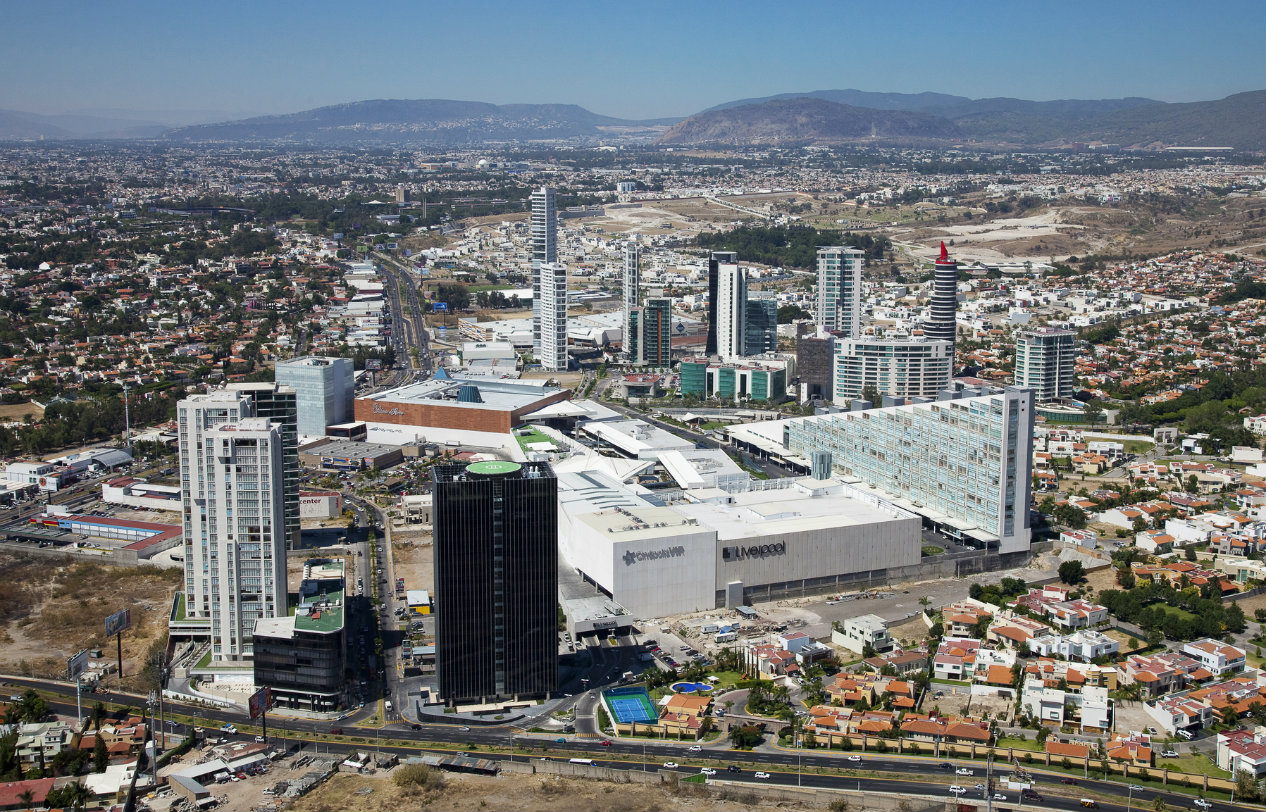
The best investments are usually found in areas that have already started growing but still have room for future development.
These areas often feature:
- New road infrastructure
- Universities
- Restaurant districts
- Cultural spaces
- Corporate developments
- Public transportation
- New urban projects
When all these elements happen simultaneously, real estate demand tends to strengthen.
That’s where the most attractive opportunities emerge.
Grupo VEQ: Projects Designed for Strategic Investing
When it comes to real estate investing, location remains the most important factor affecting profitability.
That is why Grupo VEQ develops projects within urban corridors that currently concentrate growth, connectivity, and residential demand.
Some notable developments include:
Brasilia
Located in Providencia, one of Guadalajara’s most established real estate markets, surrounded by corporate corridors, restaurants, and essential services.
Bruselas
Located in Niños Héroes, an area with significant potential thanks to its proximity to major avenues, urban centers, and evolving residential dynamics.
Orendain
A project designed for those seeking an investment aligned with urban evolution and emerging housing trends.
What matters is not only the development itself.
What matters is the environment surrounding it.
Because properties that tend to deliver the best results are those located where people want to live, work, and build their daily lives.
Before Investing, Speak With an Advisor (No Obligation)
Experienced investors understand one thing very well:
Not every opportunity should be evaluated the same way.
Every investor has different goals.
Some prioritize rental income.
Others want to protect and grow their wealth.
Many seek a combination of both.
That is why, before making a decision, it is worth analyzing different profitability scenarios with the guidance of a specialist.
At Grupo VEQ, you can receive a personalized consultation with no obligation to discover which project best aligns with your financial goals.
Because beyond selling apartments, the objective is to help you build a long-term wealth strategy.
Sometimes, a 30-minute conversation can provide more clarity than weeks of independent research.
The Best Investment Is Not the Most Expensive One. It’s the One You Understand.
The real estate market will continue to evolve.
Interest rates will rise and fall.
Cities will keep transforming.
Trends will change.
But one thing will never lose its value:
Making decisions based on information.
Because once you learn how to calculate the ROI of a property, you stop seeing properties.
And you start seeing opportunities.
And that difference may become one of the most important financial decisions of your life.
CLICK HERE FOR MORE INFORMATION