In high-demand real estate markets, profitability isn’t built on promises. It’s built on location, connectivity, and a constant flow of people.
Cancún is a unique case. It’s not just a tourist destination—it’s a regional economic engine with strategic infrastructure, steady visitor arrivals, and a rental market that operates virtually year-round.
That’s why smart investment in Cancún is increasingly focusing on one specific corridor: Avenida Colosio. A zone that connects directly to the airport, the urban center, the Hotel Zone, and the most important mobility projects in the destination.
Cancún Doesn’t Depend on Seasons: It Depends on Flow
One of the biggest mistakes when analyzing Cancún is assuming it behaves like a traditional tourist city. The reality is that demand is supported by three forces happening at the same time:
- international and domestic tourism
- leading air connectivity in Mexico
- urban expansion and residential growth
According to data from the Mexican Caribbean tourism sector, Cancún continues to rank among the highest-volume destinations in the country, with millions of arrivals each year. That flow supports the rental market, local consumption, and, as a result, real estate demand.
For investors, this means something critical: the destination doesn’t just sell vacations—it sells occupancy.
And that’s where smart investment in Cancún starts to stand out.
Av. Colosio: Where Connectivity Turns into ROI
In real estate, there are “good” locations—and there are locations that function like financial infrastructure.
Avenida Colosio is the second.
Its relevance comes down to three concrete factors:
1) Real Proximity to Cancún International Airport
A property located within 20 minutes of the airport holds a direct advantage in two markets:
- vacation rentals (fast arrivals and departures)
- executive residential rentals (mobility and logistics)
In Cancún, the airport is a critical anchor because it concentrates a major share of tourist flow. For investors, that translates into stronger competitiveness compared to areas that rely on longer travel times.
2) The Nichupté Bridge: Mobility That Drives Appreciation
The Nichupté Bridge is one of the most important mobility projects in Cancún. Its goal is to improve connectivity between the city center and the Hotel Zone, reducing travel times and improving traffic flow.
When a city invests in infrastructure that reduces mobility friction, a well-known effect occurs in the real estate market: value shifts toward areas that become more accessible and strategically positioned.
In other words: new mobility creates new appreciation.
3) The Maya Train: Macro Impact Across the Mexican Caribbean
While the Maya Train does not run directly through Avenida Colosio, its impact is regional. It strengthens the southeastern tourism corridor, expands routes, and reinforces the Mexican Caribbean as a long-term investment destination.
From a market perspective, this increases the perception of stability and boosts the appeal for both domestic and international investors.
And that matters because smart investment in Cancún isn’t measured only by what happens inside the city, but by what is being consolidated around it.
Appreciation: The Argument That Matters Most to Capital
In destinations like Cancún, appreciation doesn’t depend only on a project’s design. It depends on:
- public infrastructure
- connectivity
- rental demand
- urban growth
- scarcity of strategic locations
Avenida Colosio checks all of these boxes.
And there’s an additional factor that investors understand well: pre-construction.
Pre-Construction: Capturing Value Before Delivery
Buying in pre-construction typically allows investors to:
- enter at a lower price point
- capture appreciation during the construction phase
- gain an advantage over future price increases
In a market with sustained demand, this gap can represent meaningful wealth growth even before the property begins generating rental income.
That’s why smart investment in Cancún often begins with one simple rule: enter early, in the right location.
Vacation Rentals: The Market That Supports Returns
Cancún has a major advantage that few destinations in Mexico can match: a vacation rental market with consistent demand.
The reason is clear:
- massive air connectivity
- steady domestic and international tourism
- events, extended high seasons, and corporate travel flow
This creates an ideal environment for Airbnb-friendly properties—especially when the location provides quick access to:
- the Hotel Zone
- downtown Cancún
- beaches
- commercial areas and essential services
In this context, returns aren’t based only on nightly rates. They’re based on something more valuable: occupancy.
And occupancy depends, once again, on connectivity.
When the Product Matches the Location
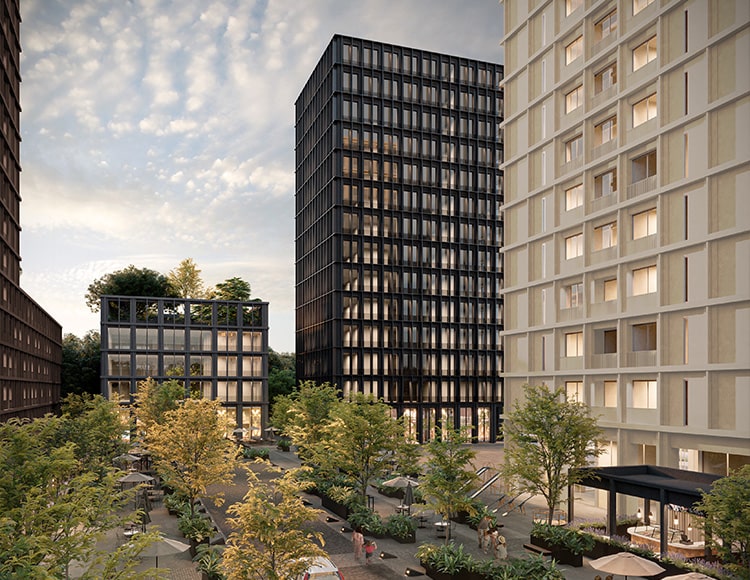
Along the Colosio Corridor, residential projects are already emerging that align with what the market is demanding: functional units, strong positioning, and fast access to Cancún’s most important areas.
Within that context, Okün Living by Grupo VEQ stands out. Located on Av. Colosio, it offers immediate connectivity to key zones:
- minutes from Plaza Las Américas, Hospital Galenia, and supermarkets
- efficient access to the Hotel Zone and downtown
- proximity to Puerto Cancún
- quick connection to beaches
- around 16 minutes from Cancún International Airport
- just a few minutes from the Nichupté Bridge
Additionally, its location behind the Nichupté Lagoon adds an increasingly valuable factor in today’s market: a natural environment without sacrificing city access.
Why Capital Is Moving Toward Colosio
Cancún will continue to grow. Infrastructure is already underway. Tourist flow remains strong. And rental demand shows no signs of weakening.
In this landscape, investors aren’t looking for “a good project.” They’re looking for a strategic entry point.
That’s why smart investment in Cancún is concentrating in corridors like Av. Colosio—where connectivity translates into:
- higher demand
- stronger occupancy
- sustained appreciation
- and a stronger long-term position
In real estate, money doesn’t move based on emotion. It moves based on logic.
And today, the logic is clear: Colosio is connectivity. Connectivity is value. And value is return.
SELECT HERE FORE MORE INFORMATION